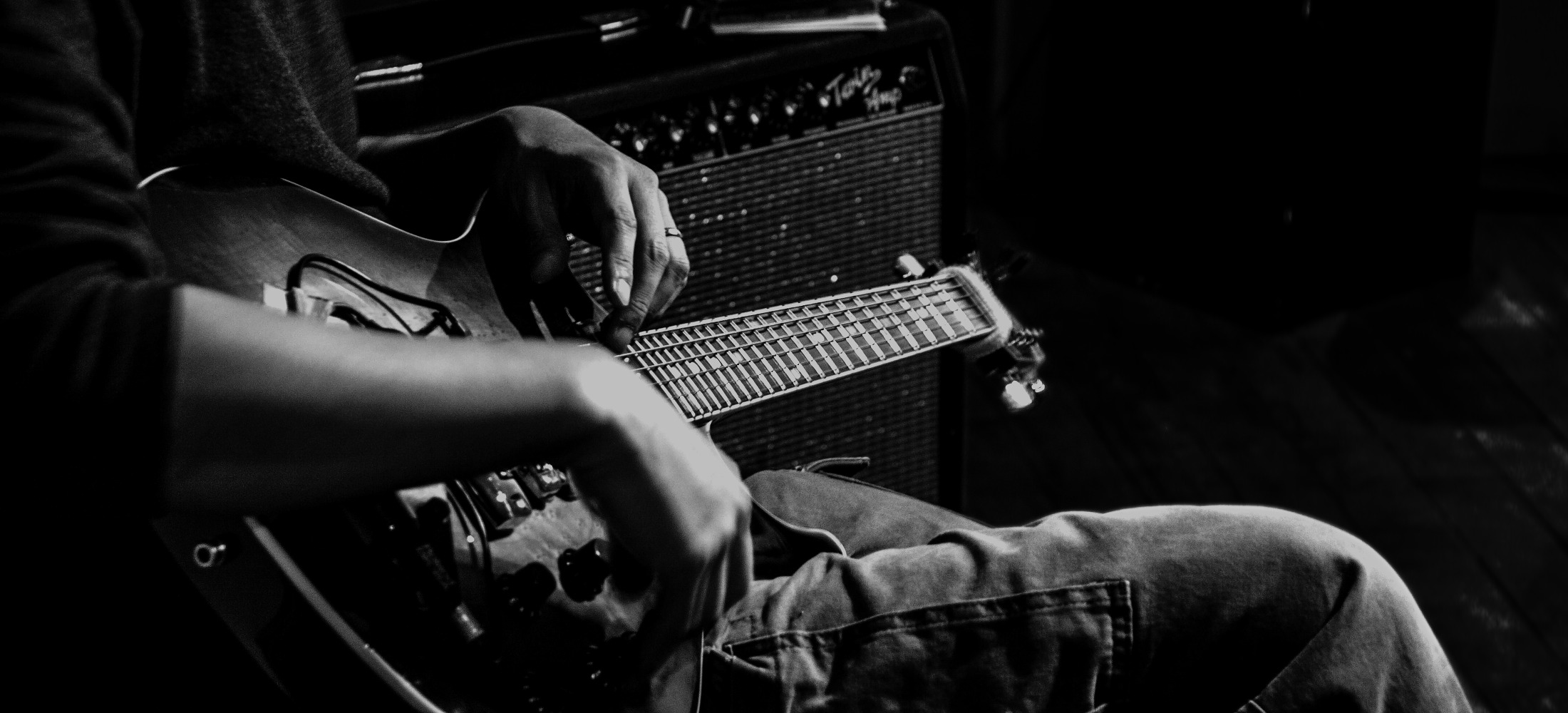
The above is a behind-the-scenes mix breakdown. If you just want to listen to music (and who could blame you), please check out the original (video and album track).
Are you still here? Okay, Juno 3: Proxemics was mixed into multiple buses (including parallel processing of ‘melodics’ and ‘environmentals,’ for example) before hitting the master bus. One of those buses was fed a mix of the bass signals from each performer. How the bass was separated, in each case, was somewhat different depending on the nature of the electronics, for example, or the instrument (e.g. clean v. fuzz guitar).
Folk have asked me about my mix strategies in approaching experimental and improvised musics, and here’s a little window into how I approached some of the problematics (I mean that in a positive, creative sense) in this one. I’ve said that, in regards to Proxemics, there’s a different album that lives in parallel, and that’s partly because there’s separate mix (with its own automation and processing) in the bass/subs.
By Han-earl Park, Lara Jones and Pat Thomas
Personnel: Han-earl Park (guitar), Lara Jones (saxophone and electronics) and Pat Thomas (electronics).
Track listing: Derealization I (4:07), Derealization II (4:57), Derealization III (3:52), Derealization IV (6:19), Derealization V (5:55), Derealization VI (3:47), Proxemics I (5:05), Proxemics II (3:54), Proxemics III (6:10), Proxemics IV (7:15), Proxemics V (6:10), Proxemics VI: Rumble (5:13). Total duration: 62:44.
© and ℗ 2025 Han-earl Park.
Crossover tests (work in progress)
I’ve approached recordings and performance as very different animals. One way this lack of interest in ‘vérité’ manifests is in how I’ve been mixing recordings of my guitar playing; sending the guitar signal through a crossover, and processing the high and low frequency components separately, feeding them into separate cab sims, et cetera. I’ve also recently performed compositions by Carina Khorkhordina, and by Camila Nebbia, that involved multiple guitar and bass amplifiers. And this got me thinking about multi-amp setups, and practical (low component-count, portable, pedal-board friendly) ways to do this kind of dual-band processing.
So the above is a test; trying to figure out whether something like a simple crossover, coupled with, say, an analog octaver, might do the job in a live situation. (This test video is based around the recording from back in May, so if you want to listen to the music without the audio tinkering, please check out the original video.)