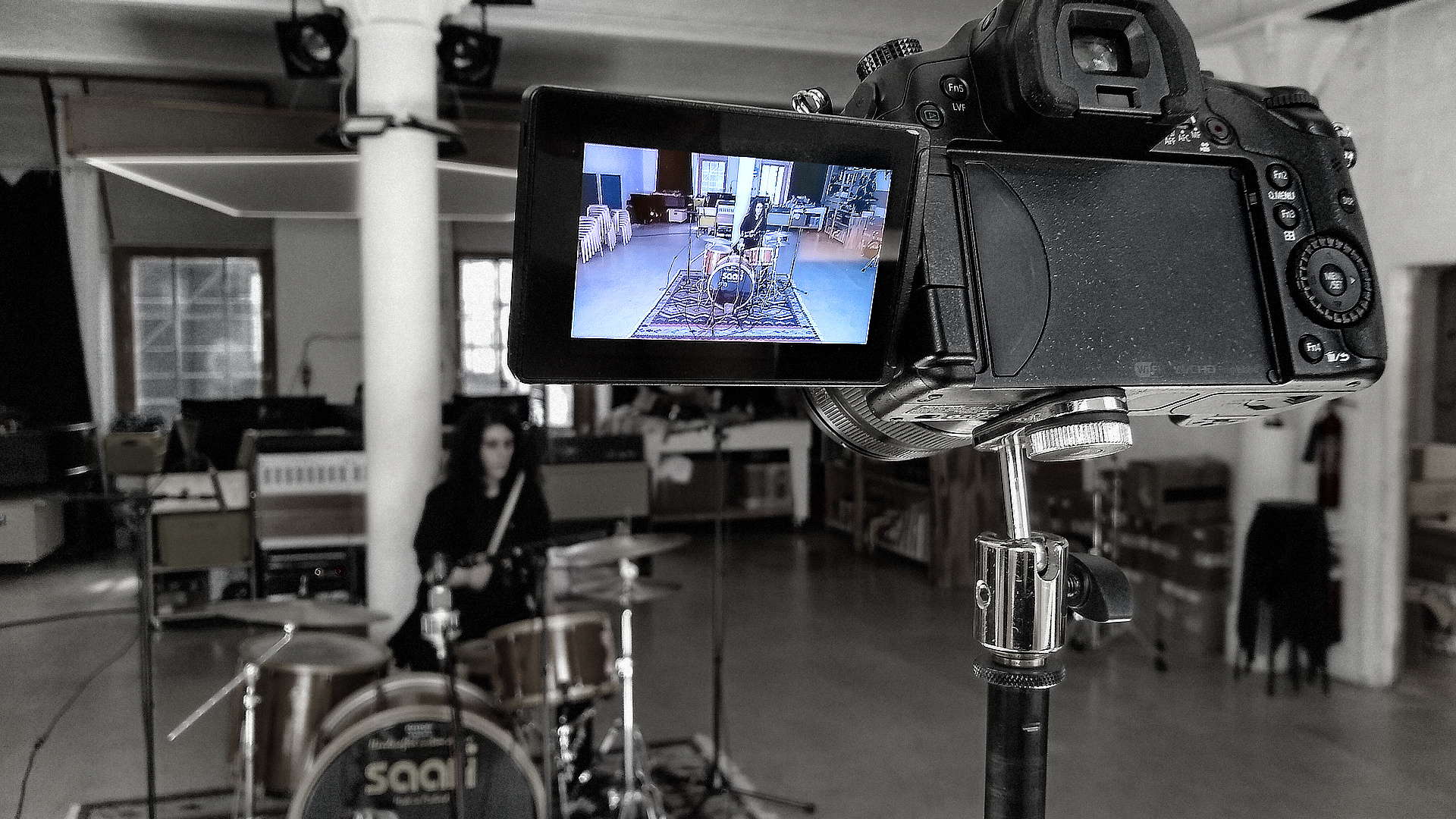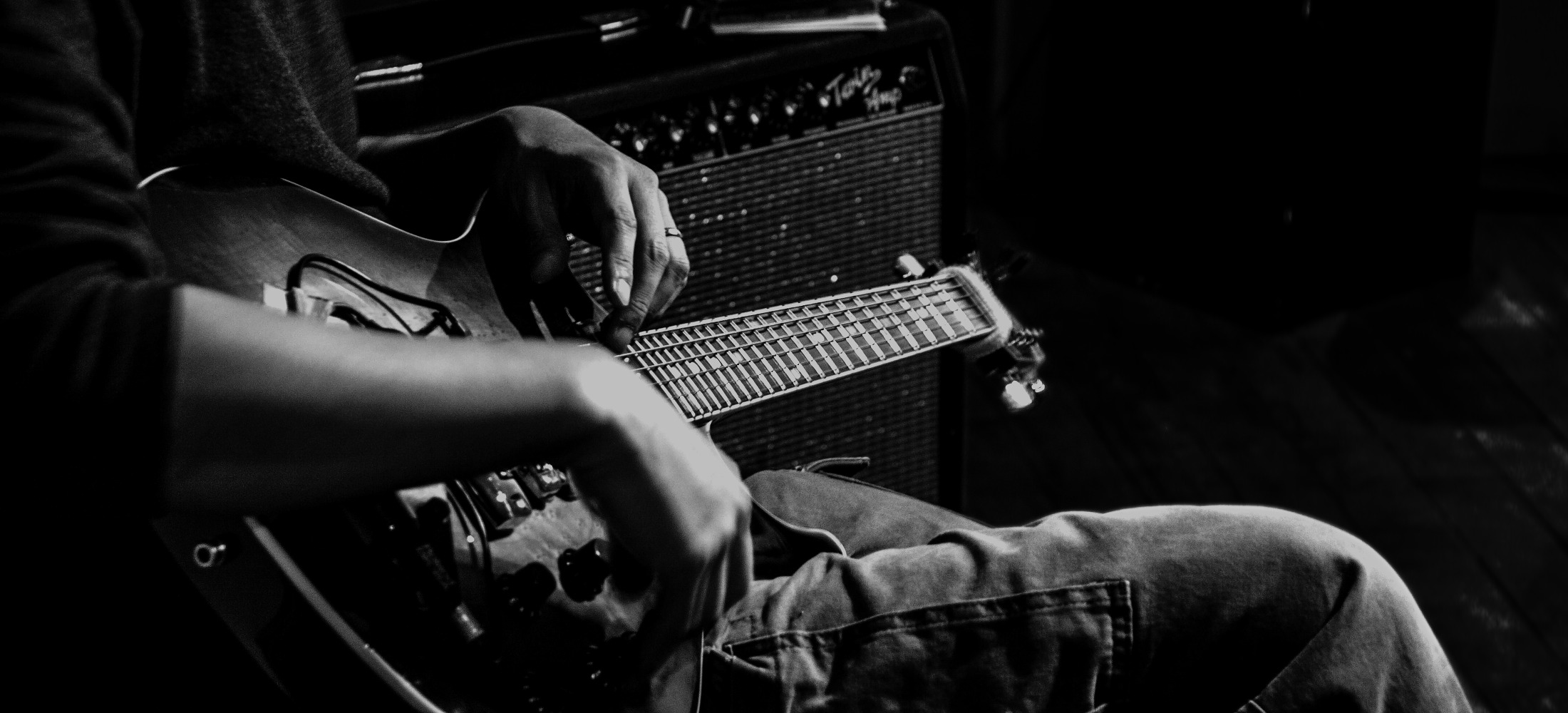
This is a piece… well, a first shot at an idea-for-a-piece that I alluded to in my previous post. It’s rough, and, in terms of recording/filming, I’m still at the mercy of available light (thanks to the short winter days), but as a first attempt, it’s… got possibilities. I have a couple of variations in mind, and I’ll try and get to these soon.
Let me know what you think—I’d absolutely welcome any feedback.
I’d had an idea for a piece—an actual piece—a kind of micro-composition. However, (just my luck) by the time I set-up,* warmed-up and re-tuned, my D-string decides to meet its maker (‘it is an ex-string’). So, by the time I’m in a position to hit record, I’m about to lose any available light (ah, winter time in Berlin).
So this is not a piece-piece (it’s barely a study), but just something to get down on (metaphorical, digital fairy dust) tape so I can get back into the swing of things.
More soon (I hope).
* Which takes a little longer with the still-new-to-me camera.
The above is a behind-the-scenes mix breakdown. If you just want to listen to music (and who could blame you), please check out the original (video and album track).
Are you still here? Okay, Juno 3: Proxemics was mixed into multiple buses (including parallel processing of ‘melodics’ and ‘environmentals,’ for example) before hitting the master bus. One of those buses was fed a mix of the bass signals from each performer. How the bass was separated, in each case, was somewhat different depending on the nature of the electronics, for example, or the instrument (e.g. clean v. fuzz guitar).
Folk have asked me about my mix strategies in approaching experimental and improvised musics, and here’s a little window into how I approached some of the problematics (I mean that in a positive, creative sense) in this one. I’ve said that, in regards to Proxemics, there’s a different album that lives in parallel, and that’s partly because there’s separate mix (with its own automation and processing) in the bass/subs.
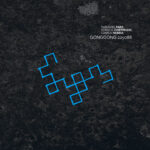
Track listing: Derealization I (4:07), Derealization II (4:57), Derealization III (3:52), Derealization IV (6:19), Derealization V (5:55), Derealization VI (3:47), Proxemics I (5:05), Proxemics II (3:54), Proxemics III (6:10), Proxemics IV (7:15), Proxemics V (6:10), Proxemics VI: Rumble (5:13). Total duration: 62:44.
I’ve approached recordings and performance as very different animals. One way this lack of interest in ‘vérité’ manifests is in how I’ve been mixing recordings of my guitar playing; sending the guitar signal through a crossover, and processing the high and low frequency components separately, feeding them into separate cab sims, et cetera. I’ve also recently performed compositions by Carina Khorkhordina, and by Camila Nebbia, that involved multiple guitar and bass amplifiers. And this got me thinking about multi-amp setups, and practical (low component-count, portable, pedal-board friendly) ways to do this kind of dual-band processing.
So the above is a test; trying to figure out whether something like a simple crossover, coupled with, say, an analog octaver, might do the job in a live situation. (This test video is based around the recording from back in May, so if you want to listen to the music without the audio tinkering, please check out the original video.)
Watch Sara Neidorf’s performance of ‘Aspect,’ a videographic recomposition by Han-earl Park with Neidorf, with music by Sara Neidorf with Park. The performance was recorded on November 15 as part of DISTORTIONS, the two-evening event of improvised music and moving images.
A big, big thanks to Sara for committing to the collaboration, and for their smart, oblique, creative choices. Thanks also to everyone who participated in this project—Carina Khorkhordina, Camila Nebbia, Yorgos Dimitriadis, Rabih Beaini and everyone at Morphine Raum—and to initiative neue musik berlin without whose support this project—these compositions, these performances—would not have been possible.
Video credits
Music by Sara Neidorf with Han-earl Park.
Videographic recompositions by Han-earl Park with Sara Neidorf.
Recorded November 15, 2025 at Morphine Raum, Berlin.
Sound engineer: Rabih Beaini. Second engineer: Malte Andrae.
Recording assistants: Valentina Costa.
Mixed by Han-earl Park.
In Perfect Sound Forever, J. Vognsen asks musicians and composers (including me) how we “maintain an on-going passion for music”:
Album after album, concert after concert, how do you avoid routine suffocating the joy of it? As your list of musical experiences gets longer, how do you make sure each new one remains special?
I read with interest the reponses from Nina Garcia, Angelica Sanchez and others. Charles Hayward’s statement, in particular, (“I like aspects of the routine thing, setting up my drums builds the vibe towards the gig, it’s a joyful thing to clamp the pedal to the kick drum”) resonanted with me. As for me:
For me, I’m not sure ‘habit’ was ever a bad thing for my creative work. I feel like habit, in the context of creative practices, lives next door to ritual….
Habit and ritual are things I hold to during, and get me through, moments of creative funk. The ritual of getting up and making myself do creative work (or making myself ‘go through the motions’ of doing creative work) keeps my creative muscles working and not completely seizing-up from lack of use. From taking the guitar out of the case, switching the amp on, sitting down, stretching and warming-up (doing the guitarist’s equivalent of long-tones or drum rudiments), to grabbing my notebook and sketching, sketching, sketching until a shape emerges. [Read the rest…]
If you enjoyed Vognsen’s piece, please also check out ‘Creative Dead Ends in Music,’ his previous piece in Perfect Sound Forever to which I also contributed a response.
Closing snap’n’shuffle from my solo performance at Kirkos, Dublin back in July. Complete with visual swipes (shuffles and foot traffic) and the occasional low frequency rumbles from passing vehicles.
Thanks so much to everyone at Kirkos for hosting the performance, and, in particular, a big, big thanks to Paul Scully for all his work making this happen, and for the audio and video recording.
Thanks so much to Graham for inviting me to contribute something for his show, and for giving me the opportunity to share some of the noise I’ve made, and the noise that has impressed and moved me recently.
I wish I could say there was a theme beyond selecting music that I had just been listening to, and a selection from some of my more recent recordings. Considering the haphazard way I put the thing together, I’m as surprised as anyone by the way the overall mix flows—from how Catherine takes-off from where Theresa Wong lands; to how Isabel and Sara reassert, reframe and re-grid Yorgos and Camila’s snaps’n’clangs; to the futz, fuzz and buzzes that bridges Steph Richards’ Fullmoon, Juno 3’s Proxemics, and Nick’s Phantom Words.
Enjoy, and please, please check out the music of these artists (including those featured by Graham during the rest of the show)—I think you’ll be inspired.
Track listing: Derealization I (4:07), Derealization II (4:57), Derealization III (3:52), Derealization IV (6:19), Derealization V (5:55), Derealization VI (3:47), Proxemics I (5:05), Proxemics II (3:54), Proxemics III (6:10), Proxemics IV (7:15), Proxemics V (6:10), Proxemics VI: Rumble (5:13). Total duration: 62:44.
Track listing: Autopoiesis I (≥ 10:14), Autopoiesis II (≥ 4:29), Niche Shift I (16:09), Niche Shift II (≥ 4:45), Niche Shift III (4:35), Niche Shift IV (≥ 12:52), Autopoiesis III (3:26), Autopoiesis IV (≥ 5:03), Autopoiesis V (≥ 3:17), Autopoiesis VI (3:37). Total duration ≥ 70:14.
This might be my last in the #onetakestudy series for a while as I’ve got a couple of other projects that will be keeping me busy in the coming months. For those who’ve been following my studies, thank you so very much for listening.
Or maybe I should have titled this one ‘Signal and Noise.’
Some ideas and fragments that I came away with from a session with Sara Neidorf. It’s a bit scattered, and very rough around the edges, but there’s stuff here that I want to return to over the coming weeks.
Simple variation on a trope, technique, gesture, color and shape. This one might be a little more impressionistic than rigorous. Some of this, I think, works; some parts better than others. Enjoy.