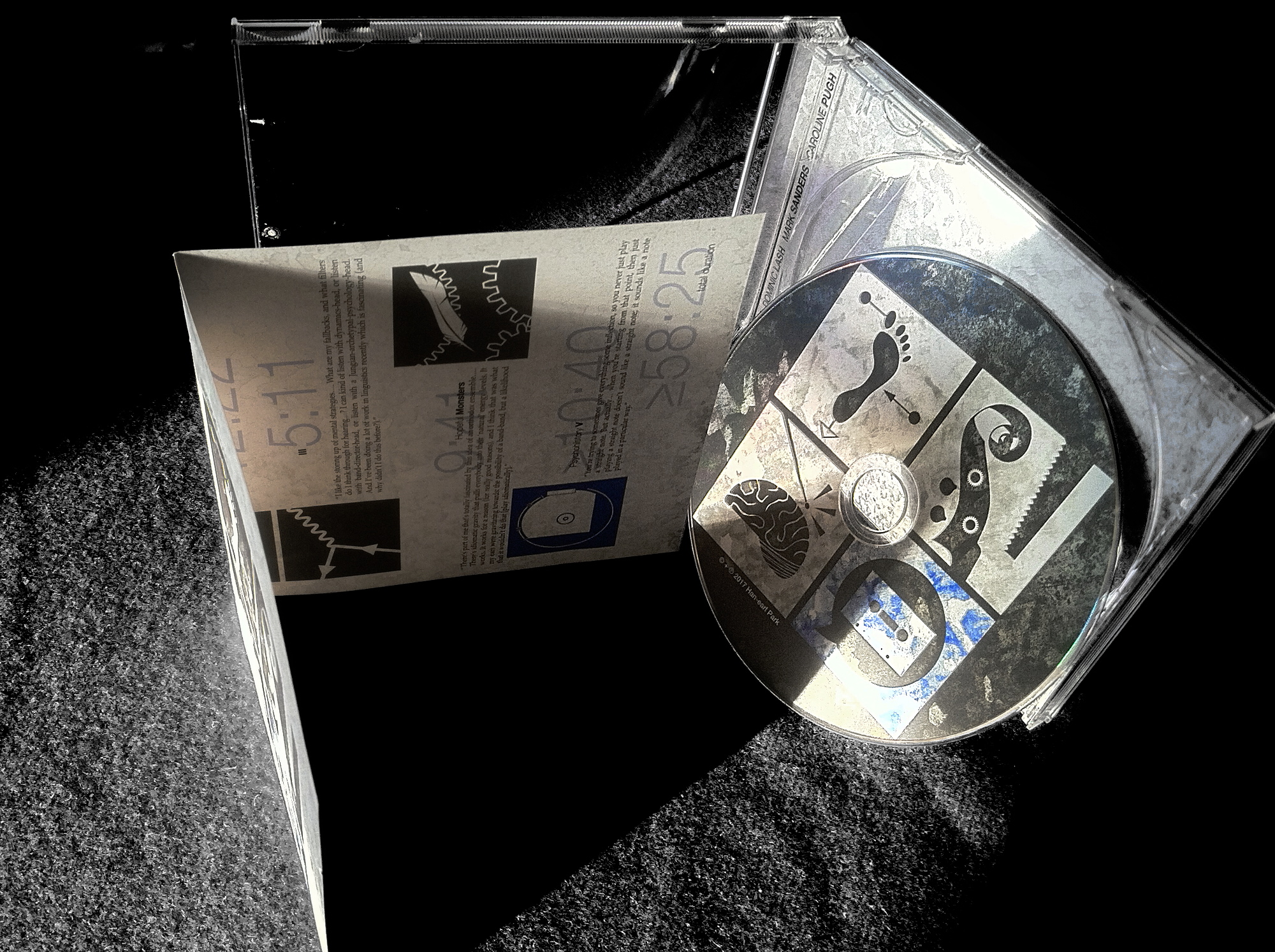
The Cliodynamics ‘suite’ begins with a recitation in an obscure (likely bespoke) language that rapidly deconstructs against the backdrop of Park’s angular, truncated proto-phrasing, Sanders’ demented clockwork drums, and Lash’s lower register punctuation. Pugh’s voice acts as a kind of guide, offering a frayed and twisted thread through a dynamic and often intimidating soundscape; a necessary albeit illusory anchor. A final wry touch is last two minutes of the closing Psychohistory V, a minimalist coda you have dial the volume right up to even hear—putting the listener in the position of chasing the chaos that moments earlier was so overwhelming.
If this attempt at description sounds rather confused, I’ll try to summarise: years ago, Derek Bailey coined the term ‘non-idiomatic improvisation’, a label that over the years has practically become an idiom in its own right. Sirene 1009 may just be the auditory experience that Bailey’s label has been waiting for. [Read the rest…]
CD: €11 minimum (‘name your price’) plus shipping.*†
Download: €8 minimum (‘name your price’).†
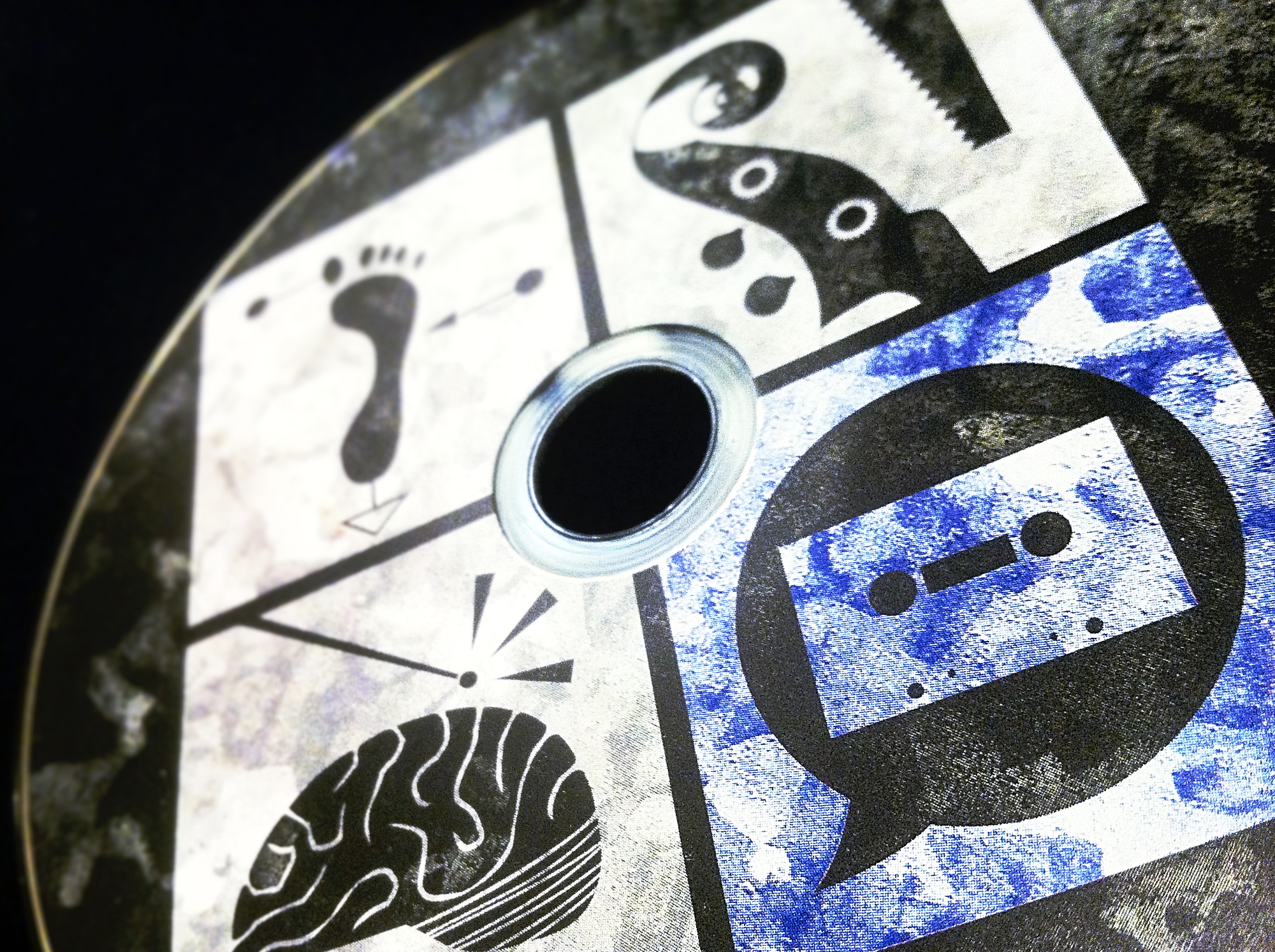
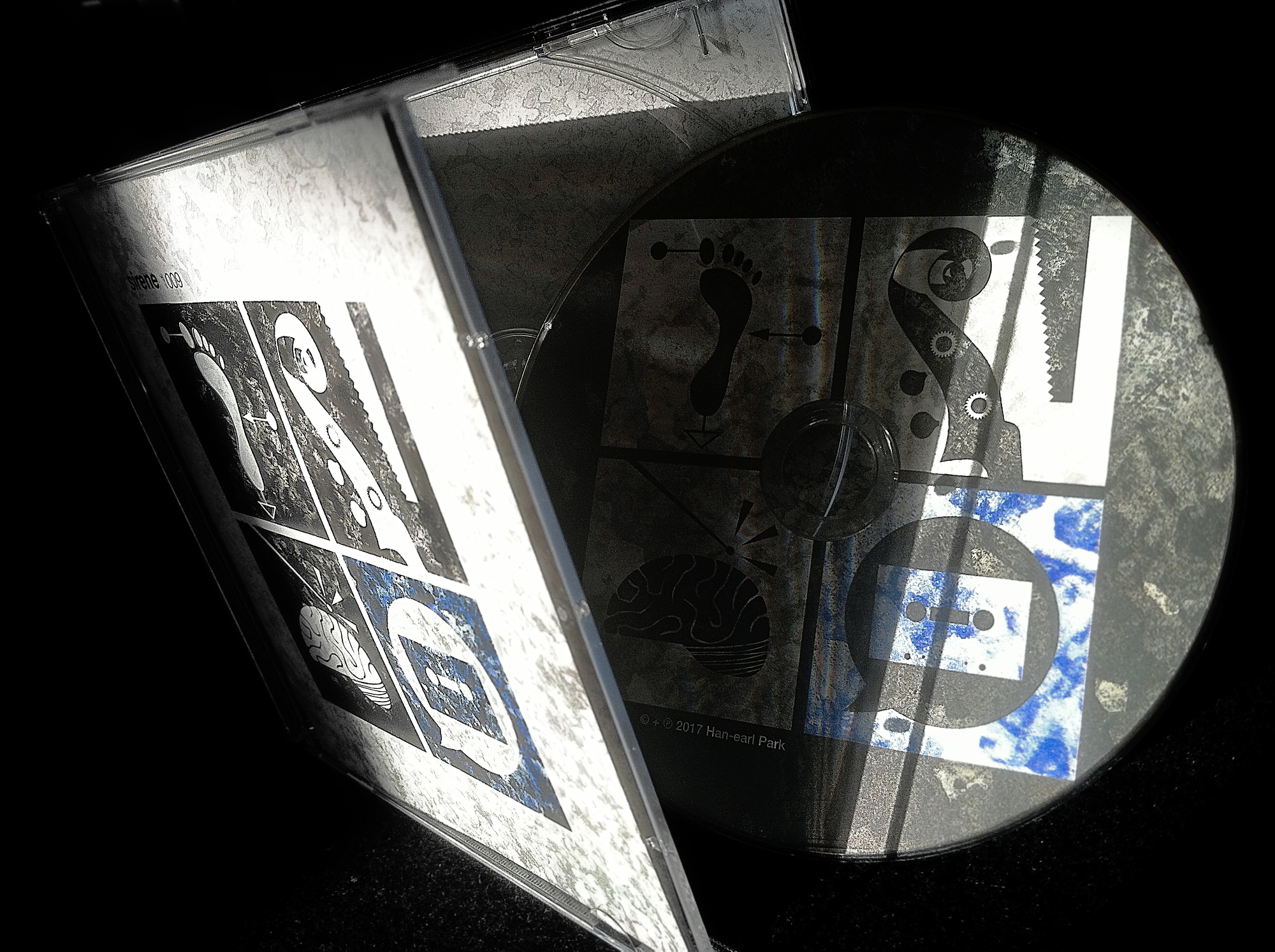
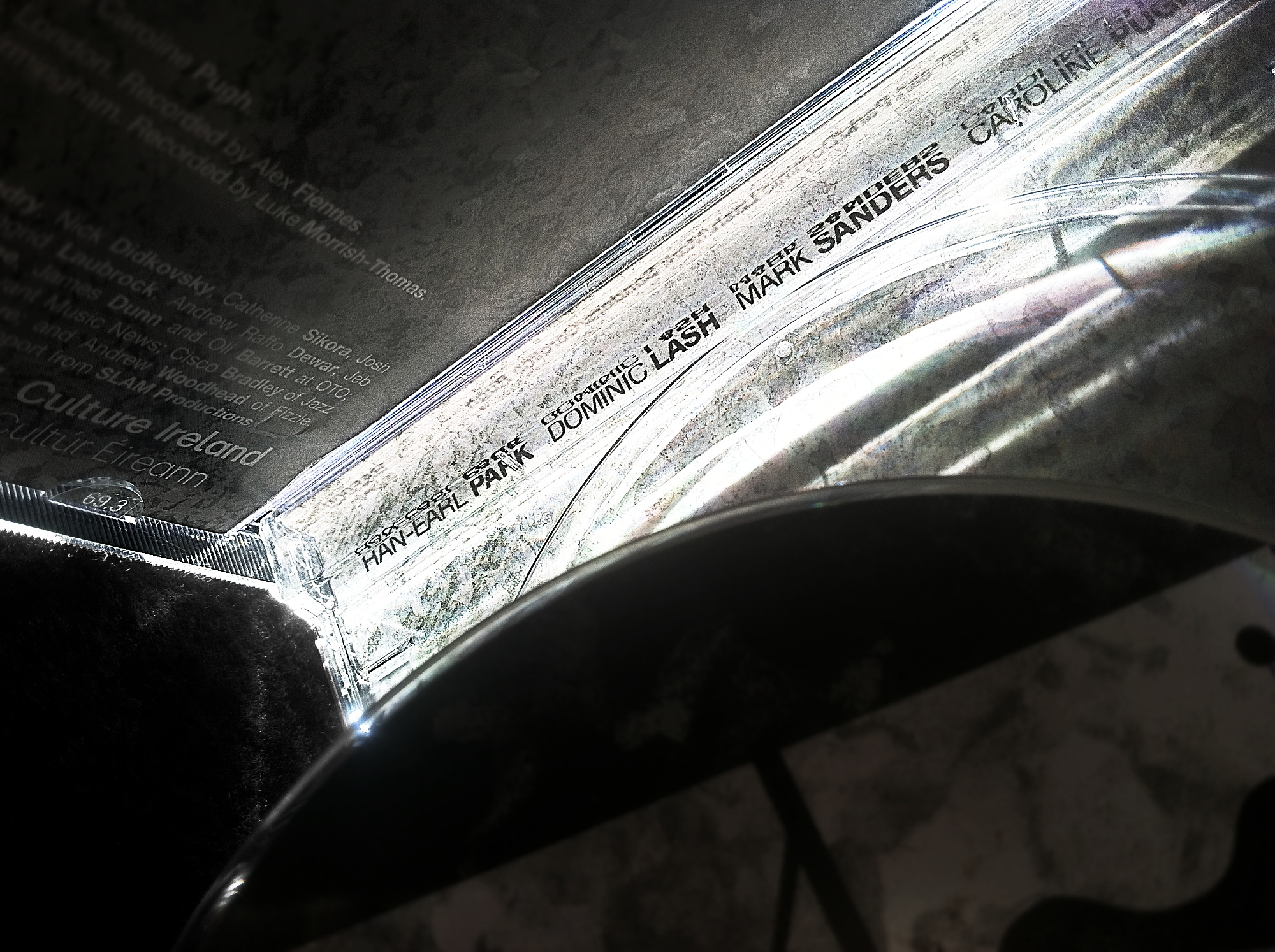
* Limited edition glass-mastered CD. CD includes additional material (artwork, etc.) not included in the download version of the album.
† Both digital and physical purchases give you streaming via the free Bandcamp app, and option to download the recording in multiple formats including lossless.
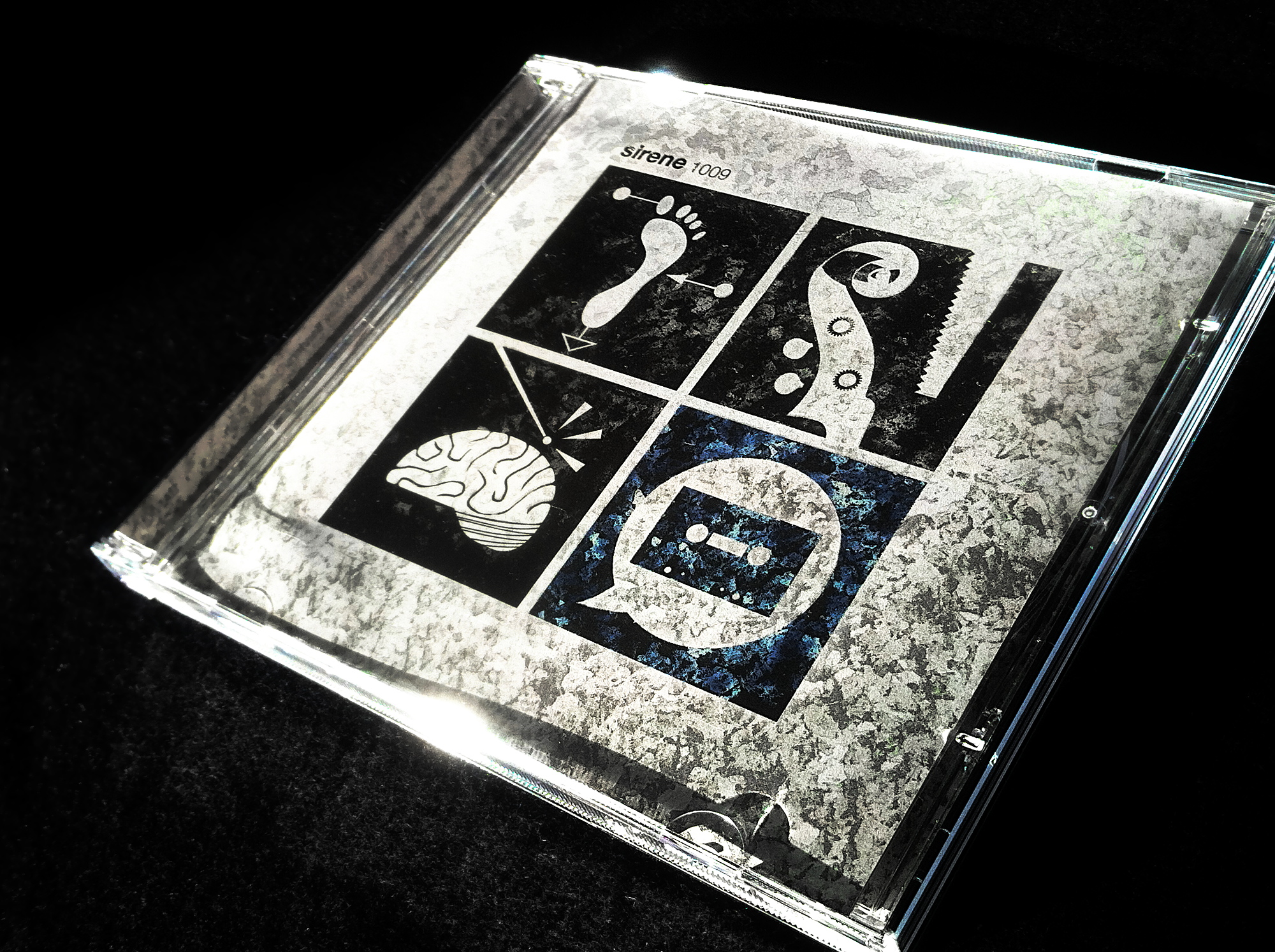
“Messy”? “scattered”? “manic”? Music that is “aggressive and acerbic and gets in your face and won’t back down”? In his review of ‘Sirene 1009’ (BAF000), Dave Sumner of Bird is the Worm concludes: “This album is brilliant. This album is insane.”
Sirene 1009 is a soundtrack for a seizure. It’s spasmodic and flails about wildly. The music is disconcerting. But it enters these fugue states of focused intensity that border on meditative, and it is the most powerful sensation to experience even the tiniest hint of serenity at the center of so much chaos. It’s unsurprising to discover that the three-part “Cliodynamics” suite was recorded live. Even via the recorded medium, there’s a palpable electricity transmitted by this music, and its voltage isn’t the least bit muffled for not having been there in person….
Mostly, Caroline Pugh‘s vocals are of the wordless variety, and so dramatic are her renderings of human sounds that it’s not inconceivable she created an alternate lexicon specifically for this recording. Park’s guitar style can be the sonic representation of slash-and-go rush hour traffic, and of significance to the success of this session is how he simultaneously captures the immediacy of individual cars in motion and the oddly hypnotic flow of mass traffic viewed from an isolated location. On bass, Dominic Lash slings out notes like stones across the surface of water. There’s a sudden burst of velocity and a magnetic patter of rhythm, and with one action, the bassist adds both melodic and rhythmic textures to a canvas that might not otherwise keep its brushstrokes contained. That said, when Lash breaks into a passage of bass arco and maintains that as his sole interest for a time, the music certainly doesn’t suffer for his abandonment of a rhythmic role. Besides, drummer Mark Sanders does a remarkable job all on his own at providing definition to music that is never clear-cut and direction to musicians capable of moving everywhere all at once. [Read the rest…]
Elsewhere, Avant Scena describes “evocative and original” music in which “various elements of rock, free jazz, creative jazz are combined in one composition.” [Read the rest…]
CD: €11 minimum (‘name your price’) plus shipping.*†
Download: €8 minimum (‘name your price’).†
* Limited edition glass-mastered CD. CD includes additional material (artwork, etc.) not included in the download version of the album.
† Both digital and physical purchases give you streaming via the free Bandcamp app, and option to download the recording in multiple formats including lossless.
Music where the “gorgeous plucked theme”, the “maniacal wails”, “booming, thunderous landscape of percussion”, and “sweetly sung passages of melodic intrigue” coexists? John Morrison, reviewing ‘Sirene 1009’ (BAF000) for Jazz Right Now, describes “a colorful, sometimes violent and revelatory listening experience that infuses modern aesthetics with the spirit of the ancient.” This, for example, is his take on Cliodynamics I:
Lash brilliantly alternates between bowed and plucked phrases as Sanders beats down a booming, thunderous landscape of percussion. Park provides a subtle bit of coloring strokes while Pugh leads the way, her maniacal wails and babbles briefly giving way to sweetly sung passages of melodic intrigue. Clocking in at ten minutes and forty four seconds, ‘Cliodynamics I’ drags listeners deep into the belly of the beast, a dark and ominous ocean of sound that only gets more intense with each passing minute. [Read the rest…]
I love that Morrison hears a music that is “ancient and primordial with ideas as open as the night sky, it is not hard to imagine that some of humanity’s first music would have sounded something like this.”
Elsewhere, in Bad Alchemy [BA 93]: “Riffing madness”? A “meta-unsettling effect”? Why is the “Elk of Entropy… smooched with acceleration-bebop”? And who “eats broomsticks and pukes horses”? In his review, despite the limitations of language (“what is permitted by decency” and “can only be hint euphemistically”), Rigobert Dittmann (a.k.a. rbd) attempts to use words like the band use sound:
Die Gitarre als Heringsdosenöffner, der knarzige oder plonkende Bass, das perkussive Dingdong oder schrottige Geruckele, das alles ist nur Ummäntelung für das… poo. Die Schottin steigert sich nämlich von der Anstrengung, nur ein-, nicht auszuatmen zum Hyperventilieren, sie probiert, sich die eigene Zunge in den Hals zu stopfen, sie radebrecht kryptovolapük, jodelt Sirenenalarm, quirlt das LLLL, kirrt auf Iiiii, imitiert eine Singende Säge, spickt Maggie Nicols mit Shelley Hirsch, schlürft rohes Rattenschaschlik und zischelt Verboteneres als das kleine Hexeneinmaleins etc. Ich kann das nur umschreiben, damit meine älteren Leser nicht in Gefahr kommen, ihre dritten Zähne zu verschlucken. Sanders paukengrollt und cymbalzischt zwar zu sonorem Pizzikato und surrender Laubsägerei noch einigermaßen im Rahmen des Guten und Schönen, aber auch die Gitarre kratzt und wabert so verstörend gegen den Strich wie es nur geht.
CD: €11 minimum (‘name your price’) plus shipping.*†
Download: €8 minimum (‘name your price’).†
* Limited edition glass-mastered CD. CD includes additional material (artwork, etc.) not included in the download version of the album.
† Both digital and physical purchases give you streaming via the free Bandcamp app, and option to download the recording in multiple formats including lossless.
ここでも音楽の概念を拡張する創造性が遺憾なく発揮されている。ギター、ベース、ドラムというオーソドックスな編成で繰り出されるアンサンブルは、彼らしくそれぞれの楽器の「気配」を過剰に抽出した物音狂想曲を奏でる。演者の感情がまったく伺えない硬質な世界はパクの使うピック同様に鉱物的な響きを供するが、合同演奏の向こうに垣間見える風景は人間の営みを動物に例えた鳥獣戯画の如きカリカチュアに他ならない。それはすなわち、岩石絵具で彩色筆された水墨画である。[Read the rest…]
Meanwhile, David Menestres at Free Jazz, giving the album ☆☆☆☆½, hears in it “a cyborg slowly coming to terms with having a consciousness”, “drums like an octopus”, and “syllabic squeaks”, “animalish noises” and “full sentences”:
There are few bands that cross as much territory as this one does. From thrashing, spastic aggressive riffs that put most punks to shame to explorations of the quietest of spaces in-between thoughts, Sirene 1009 is a fierce, adventurous band that goes where most bands don’t: into the unknown, fearlessly in search of the new….
Don’t expect the band to hold your hand. There isn’t any way off once they take flight. Go along for the ride. If you bail out mid-flight you’ll just end up another D.B. Cooper, lost to time, never to be found again. [Read the rest…]
Menestres also described Kuramoto Synchronization, the free bonus album that comes with pre-orders of ‘Sirene 1009,’ as “an exquisite exploration of space, time, nightmares, and dreamscapes.”
Elsewhere, A Closer Listen writes that “Han-earl Park, Dominic Lash, Mark Sanders and Caroline Pugh make quite a racket on Sirene 1009, tossing clatter and gentle obscenities all around the playroom….” Finally, although it’s not even released yet, ‘Sirene 1009’ still manages to get on Avant Music News’ 2016 Runners-Up list (Mike Borella, thanks for listening!).
CD: €11 minimum (‘name your price’) plus shipping.*†
Download: €8 minimum (‘name your price’).†
* Limited edition glass-mastered CD. CD includes additional material (artwork, etc.) not included in the download version of the album.
† Both digital and physical purchases give you streaming via the free Bandcamp app, and option to download the recording in multiple formats including lossless.
Monopod is a sprawling, non-idiomatic (and non-repetitive) improvisation of suite-like proportions (27 minutes and counting). Impressive in scale, overwhelming in execution, it’s a cyclic frenzy of fragmented sounds without an ounce of entropy, yet somehow with a sense of clear movement and progression. Warning: close listening can produce altered states….
Confused [re. Metis 9]? I was. Emperor’s new clothes…? Given the playful nature of Park’s website, a little leg-pulling is not entirely out of the question. Nor does the questionnaire in the liner notes dispel the possibility with its mix of obfuscation and subversion…. And while the explanations left me feeling Park is clearly some kind of obscure genius—either a genius improviser or a genius charlatan, and I’m inclined towards the former—damned if on a re-listen, I didn’t think I could spot some of these tactics at play. Stroke your chin and check out the ‘interrupting continua’ emerging about two-thirds of the way through Pleonasm…. It’s fascinating to listen with that possible strategic structure in mind….
After all the preceding intensity… Stopcock’s intro—in which actual guitar strings can be discerned—is almost light relief, despite its tricky density. Then second guitar begins to play hide and seek, giving the uncanny sense of listening to two separate pieces at the same time in serendipitous juxtaposition. Cue Sikora’s ever free, ever inventive tenor and the layers are complete for a highly worthwhile finale. [Read the rest…]
Screeching and scraping in an improv style, this quartet assailed the ears with a pleasing melee of noise, some of it vaguely intelligible. Caroline Pugh jabbered away in what sounded like snatches of Greek, while the guitarist Han-earl Park did impossibly intricate yet percussive stuff on his guitar fret. Mad but entertaining. It was in the backroom of a gloomy back-street boozer. When I tentatively asked the elderly landlord “Where’s the jazz tonight?”, he said “I wouldn’t call it jazz. More like a fookin’ racket.” He was right! [Read the rest…]
Guitarist Han-earl Park joins those improvisers who conceive of a playbook for interactive tactics….
As the guitarists clip staccato whines with ingot-like density from below the bridges and along the necks, her [Sikora’s] wistful soprano saxophone variations preserve the linear form, eventually making common cause with offbeat folksy strums from one string player. Hear Sikora’s final unaccompanied cadenza as potential human triumph over, or coexistence with, the widening machine-produced tremolo pumps. A folk-like overlay also makes its appearance on the concluding “Stopcock”, although the tenor saxophonist’s concentrated upwards snarls and magnetic near-string-tearing pops from guitar strings make the track so atmospheric as to become almost frightening.
The wailing vigor of Sinton’s bottom-pitched horns adds to the reeds’ aleatoric strategies on the other three
tracks. Nearly verbalized reed tones are so euphonious on “Flying Rods” that the subsequent layered lines nearly move into songbook territory. But Park’s parallel flanges and hard thumping keeps the results electronically plugged in as well as pointedly blended.
Sardonically printing a faux questionnaire about Metis 9 application in the CD booklet shows that Park champions music over theory. With associates like Sikora, Didkovsky and Sinton, it appears he can have it both ways. [Read the rest…]
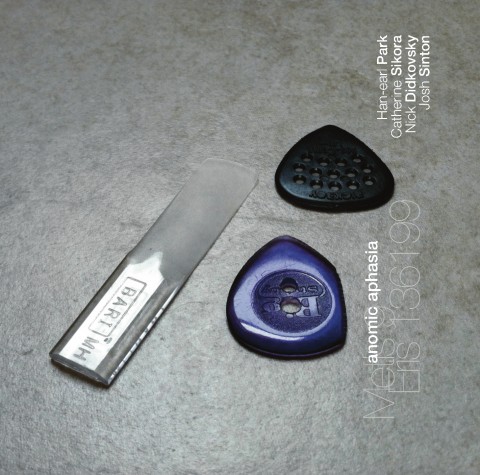
Meanwhile… “dynamic, articulate”? “jarring, discordant, loud and experimental”? “interesting acoustic altercations?” sounds that are simultaneously “alien and captivating”? (I certainly love the idea that my guitar “breaks constantly with magmatic rumblings.”) Accompanying the interview with Han-earl Park in jazzColo[u]rs, Andrew Rigmore and Antonio Terzo review ‘Anomic Aphasia’:
Votato all’improvvisazione basata su macro tattiche, artefice di un impiego ritmico—molto personale—della chitarra, e fautore di sonorità comunque aliene e trascinanti al tempo stesso, Han-earl Park è musicista conscio dei propri limiti, che cerca di superare con un approccio “alternativo”, umile e di ricerca. A beneficiarne, innanzitutto, la voce della sassofonista Catherine Sikora, sonora, multicolore e sfaccettata…. Mette in campo due diverse formazioni: la prima, stridente, discordante, rumorosa e sperimentale, con il chitarrista Nick Didkovsky, ossia l’Eris trio, l’altra, più dinamica, articolata e meno dissonante, invece, insieme al sassofonista—anche lui sui generis—Josh Sinton, ossia Metis 9…. Han-earl Park lo dice chiaramente: il terreno è, specie per Metis 9, quello della sperimentazione, e dal punto di vista pratico, siamo certo molto lontani da quel che si intende per jazz. Ma è anche vero che essere pratici spesso impedisce di vedere il possibile. E, soprattutto in arte, uccide la fantasia.
Mr. Park moved here for a few years not too long ago and worked with a number of Downtown musicians…. This is Mr. Park’s first disc with those Downtowners, an interesting cast from different scenes…. Mr. Park wrote or provided directions for each piece…. The first trio is for two guitars and Ms. Sikora on saxes. It is very long and both guitars sound well-integrated, Mr. Park played those fractured notes similar to Derek Bailey and Mr. Didkovsky using some sustain or other devices to thicken up his tone or provide alien textures. Ms. Sikora… works well in the two guitars or two saxes context here. This is a strong, long and spirited disc of challenging music where all of the players help determine the direction and interaction. Another great thing about this disc is getting to hear bari sax great Josh Sinton stretching out at length. [Read the rest…]
Finally, KFJC 89.7 FM hears music that spans “cacophony to melody”, and a “beautiful noise”:
It’s all about guitars versus sax. Sax versus guitars. Sax and guitars together. They are challenging and phenomenal works with the musicians playing off of each others ideas. The guitars are each unique in approach and Sikora goes for it with her sax taking them on note for note. There is pause and space, much needed allowing the listener to appreciate it all. Cacophony to melody…. What is clear is the stunning trio work…. The feeling is different but still crazy, intertwining each others notes, letting them stand, then facing off, blending, melding, challenging each other. A beautiful noise. Free jazz continuing to experiment. [Read the rest…]
Thanks to KFJC 89.7 FM for all the support over the years (shout outs to Carson Street, Edison Einstein, Cousin Mary, Dada Diogenes and Spliff Skankin!), and I’d like to take this opportunity to thank, in particular, WNUR 89.3 FM, CHRW 94.9 FM, KALX 90.7 FM and WFMU 91.1 FM for their airplay.
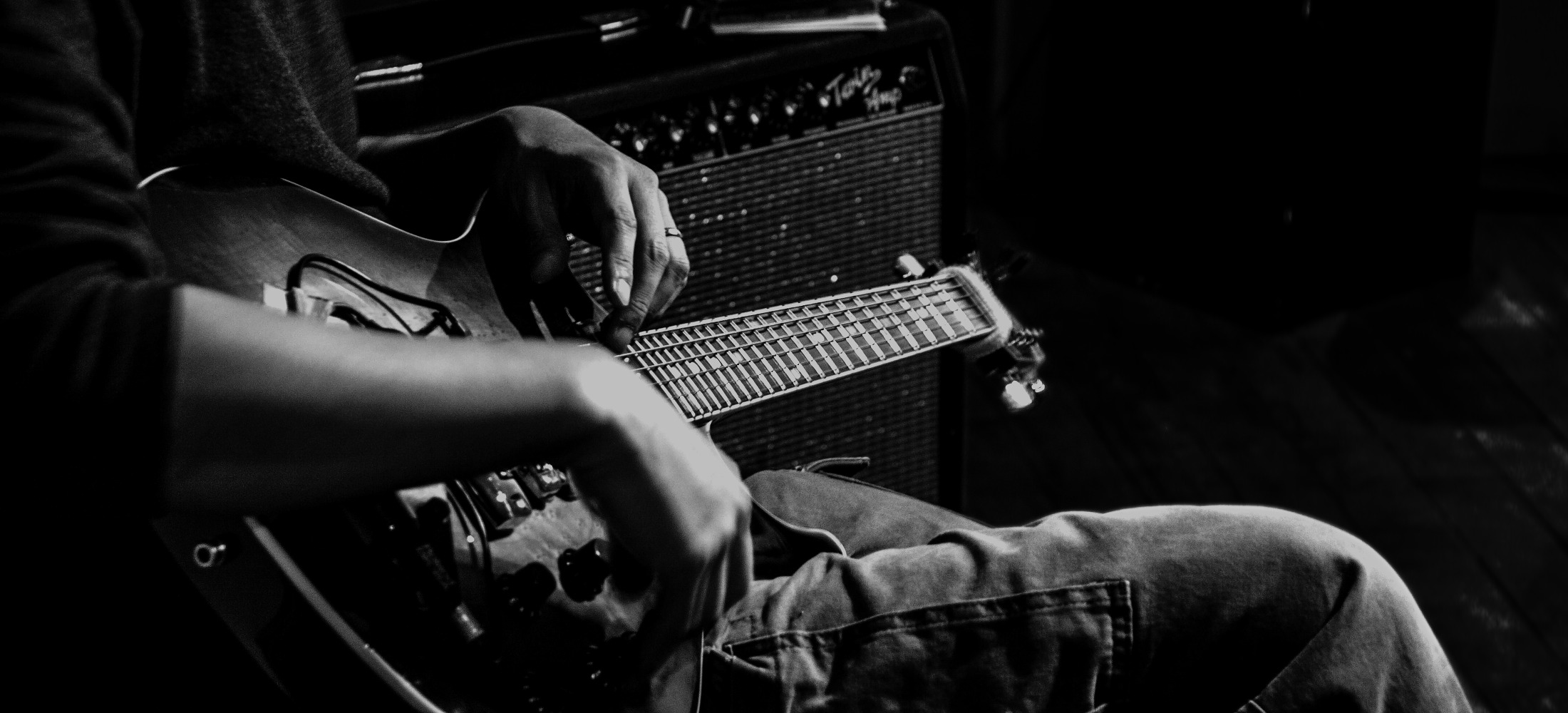
The current edition of jazzColo[u]rs (Sommario Ago./Set. 2015, Anno VIII, n. 8–9) has an interview with me by Andrew Rigmore. It covers a broad range of my work, from my close collaboration with Catherine Sikora, my working relationships with Paul Dunmall, Evan Parker, and drummers such as Mark Sanders, Charles Hayward, Gino Robair and Tom Rainey, to ensembles and projects such as Eris 136199, Mathilde 253 and io 0.0.1 beta++. We also discuss the location of noise, rhythm, harmony and melody in my work, and the relationship between structure and improvisation. Andrew Rigmore opened by asking me about the meaning of ‘tactical macros’ in the context of Metis 9:
Descrivo Metis 9 come insieme di “tactical macros”, una sorta di libretto di strategie di gioco per l’improvvisazione pensato per un insieme di improvvisatori. Si tratta di schemi interattivi: Metis 9 non detta mai un evento preciso — un suono, un rumore — che chi suona debba eseguire — sarebbe un anatema per un’indagine seria nell’improvvisazione —, ma ha in sé i parametri per [intendere] quali tipi di interazione siano praticabili e quali invece risulterebbero… difficili. Le macro tattiche che creano Metis 9 sono spesso ambigue, perfino nebulose, a tal punto da paralizzare chi non è abituato ad improvvisare. Sono per certi versi simili alle regole dei ragazzini che giocano liberamente: esistono solo se funzionali al gioco — se sono divertenti, interessanti o portano a un gioco più intrigante — e vengono liberamente mutate, reinterpretate e mollate quando il gioco porta altrove. Dun- que non si tratta di composizioni in sè — che implicherebbero una sorta di appropriazione d’autorità, ingiusta verso gli sforzi dei performer —, per cui ho introdotto il termine “macro”: un’istruzione abbreviata che si espande in un processo reale non conoscibile tramite l’istruzione iniziale e di cui sono responsabili i performer — i veri agenti interattivi.
[I describe Metis 9 as a collection of ‘tactical macros,’ and by that I mean that Metis 9 is a kind of playbook for improvisation; it’s designed for an ensemble of improvisers, and it’s, in a way, about improvisation. These are interactive schema: Metis 9 never dictates the exact gesture—each bloop or bleep—that the performers are to execute—that, I think, would be an anathema to a serious inquiry into improvisation—but it does lay the parameters for what kinds of interactions might be possible, and what kinds of interactions might be… difficult. These tactical macros that make up Metis 9 are often ambiguous, possibly nebulous, to the point of, I suspect, being paralyzing to non-improvisers. They are somewhat akin to the rules that are enrolled when you see young children in free play. The rules only exist if they serve the play—if they are fun or interesting or lead to further engaging play—and are freely mutated, reinterpreted and jettisoned when play leads elsewhere. So they aren’t really compositions as such—that would take a kind of authorial appropriation that would be unfair on the efforts of the performers—which is why I stuck the term ‘macro’ on it: it’s a shorthand instruction that expands into a real process, but the process itself is not knowable from the initial instruction; the performers—the actual interactive agents—are responsible for that.]
You can read more in the current issue of jazzColo[u]rs. The issue also includes Andrew Rigmore and Antonio Terzo’s review of Anomic Aphasia (SLAMCD 559).
Thanks to Andrew Rigmore, Antonio Terzo, Piero Rapisardi and jazzColo[u]rs for the profile and their support, and to Scott Friedlander and Fergus Kelly for the photographic portraits that accompany the article.
Expériences de résonnances et d’occupation de l’espace sonore. Très dramatique sans narration. Tout l’espace est occupé, toujours de manière surprenante, avec peu de sons, peu de matière (toutefois l’occupation peut se densifier sans rupture), travaillée finement, une dentelle de musique. Des allers et venues des sons comme de personnages sur ce qu’on peut vraiment appeler une scène musicale. Un travail de legato général, structurel, dans la rupture permanente des sons individuels. Un disque étonnant dans lequel les sons de l’automate sont reconnaissable sans être décalés. Les humains ne jouent pas comme s’ils étaient entre eux, le robot les influence, l’inverse est vrai. [Read the rest…]
Meanwhile Beppe Colli at CloudsandClocks, while writing a detailed blow-by-blow account of the record (with two guitarists as Sunny Murray and Jimmy Garrison), also takes time to unpack the names and terms enrolled in the album:
Given my background in sociology, I thought I understood what ‘anomic aphasia’ stood for, but had a look at the dictionary anyway, and that’s what I found: that while words such as ‘anomie’ and ‘anomy’ are part of the vocabulary of social sciences, the Medical meaning of the word ‘anomia’ is ‘a form of aphasia in which the patient is unable to recall the names of everyday objects’. Interested readers are invited to think about the ways in which the above-mentioned definition and the questionnaire that appears in the CD booklet—a series of questions which investigate important issues with a light tone—relate to improvisation….
Then there’s the trio of Park and Sikora plus Josh Sinton on baritone saxophone and bass clarinet, a trio that on two occasions employs ‘tactical macros’ devised and specified by Park himself bearing the name METIS 9. At first I thought that ‘macro’ stood for ‘meta-rule’, but the ‘anomic’ episode made me interrogate my dictionary one more time, so I found a meaning of macro as “a single instruction that expands automatically into a set of instructions to perform a particular task”. In fact, the transition from Monopod—the long improvised track that opens the CD—to Pleonasm—a track that has musicians making use of ‘tactical macros’—runs parallel to a transition towards shared rules that are correctly understood by the featured musicians. [Read the rest…] [In Italian…]
The guitarists’ [Nick Didkovsky’s and Han-earl Park’s] two very different styles could have clashed, but they find ways of fitting them together that leave space for the saxophone. [Catherine] Sikora could have been crowded out but she skilfully adapts to the soundscapes created by the guitars, and integrates her playing without compromising her style…. At times that playing does fit Park’s “noisy, unruly complexity” description, but when they are in full flow together, their exchanges fit together perfectly and are simply exhilarating, sometimes verging on lyrical….
Key to the success of the album’s middle three tracks is their line-up of Park and Sikora with Josh Sinton on baritone saxophone or bass clarinet; one guitar plus two reeds works better than one saxophone plus two guitars. Aurally, the separate contributions of these three individuals are easier to determine. Sinton’s confident, fluent improvising stands out as this trio’s trademark sound…. The interweaving of the trio’s three strands works effectively, with credit going equally to each member. [Read the rest…]
In his ☆☆☆☆ review, Paul Acquaro at Free Jazz finds a “great set of free jazz trio work” in which “every twist and turn, scrape, squeak and melodic idea contributes to this adventurous and exciting recording”:
The album clocks in at a generous 71 minutes, and none of it is wasted. Starting with the 20 minute ‘Monopod’ with the cast of Sikora, Park and Didkovsky, things are off to a (briefly) squeaky start, then track begins in earnest, with the tenor sax’s free form melody cutting through the slashing tones of the guitars. What starts brittle, grows tough and dense. The ‘conversation’ between the sax and the guitars is intense at times, and at other times tender. Generally speaking, Park tends to be more atmospheric while Didkovsky is more biting.
The track ‘Pleonasm’ features the trio of Sinton, Sikora and Park. The rich tones of Sinton’s baritone sax and bass clarinet contrast nicely with Sikora’s vivacious playing on the tenor and soprano saxes. The track begins with Park’s minimalist approach—he employs a vocabulary of textures and taut phrases as the saxes reply with staccato bursts of melodic runs. The song, like the others, is abstract but there is something at the nexus of the trio’s playing that remains accessible and captivating.
‘Stopcock’ is the long burning closer to the album. Back to Sikora, Park and Didkovsky, the trio delivers a fascinating performance that starts with arpeggios and rhythmic picking lending a somewhat metal feel to the introduction. The two guitars play in parallel for a while—some time reaching agreement, other times in friendly competition. When Sikora joins, she delivers a vigorous melody that pulls the track together.
Between the four musicians, Anomic Aphasia is a great set of free jazz trio work. Every twist and turn, scrape, squeak and melodic idea contributes to this adventurous and exciting recording. [Read the rest…]

![‘Han-earl Park: al ritmo afasico della chitarra’, jazzColo[u]rs (Sommario Ago./Set. 2015, Anno VIII, n. 8-9)](http://www.busterandfriends.com/_buster_wordpress/wp-content/uploads/2015/08/jazzcolours_08-2015-620x507.jpg)